Sejarah Malaysia & NusantaraBaharu
Malacca: The Town & Its Society During The First Century Of Portuguese Rule
oleh Luís Filipe Thomaz
50 penilaian Akses kekal
Ringkasan
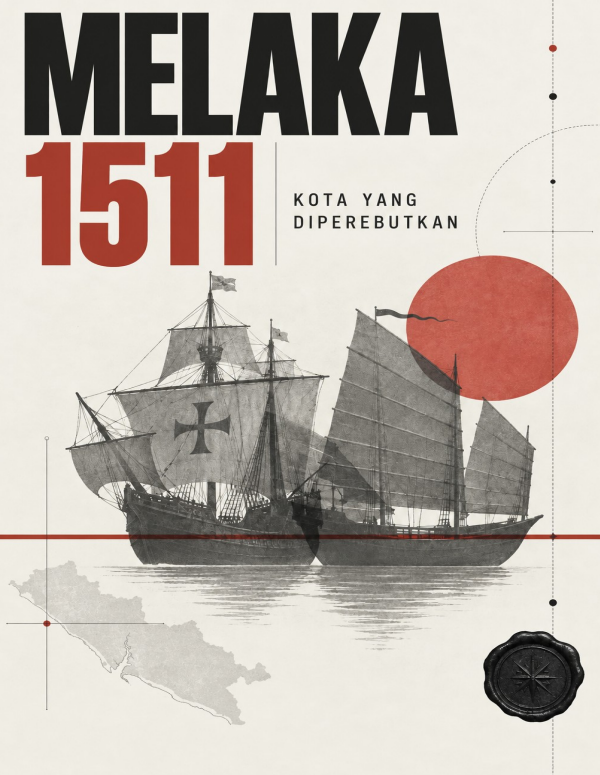
When the Portuguese arrived in Asia, they had already gained almost a century's experience of expansion in the Atlantic region. This expansion had been very diverse in nature, right from the outset. One can easily distinguish three main trends in this movement. Firstly, there was the medieval occupation of Morocco in 1415 starting with the conquest of Ceuta. This was an aggressive enterprise inspired by the same ideology as the Crusade and involving, in particular, the military class, in other words the lower nobility. Secondly, we have the exploration and exploitation of the West coast of Africa commencing a few years later in around 1422 with the first attempts to round Cape Bojador. This was in general a peaceful, commercial expansion based on pure barter without any endeavour to control production or to establish territorial dominance. Trade was carried out partly by the Crown, partly by private individuals, members of either the bourgeoisie or the nobility who engaged in commerce. The basic structure was that of a network of navigation routes supported on land by permanent or temporary factories. Thirdly we have the colonization of the islands in the Atlantic beginning with Madeira in 1419. This involved territorial occupation, the establishment of settlers and development of an agricultural economy and was the model for the colonisation of Brazil. It was not followed, however, in the East.
Halaman
18
Tahun
2026
Bahasa
Bahasa Melayu
Format
PDF · EPUB-ready
Percuma
Apa yang anda dapat
Tentang ebook ini
When the Portuguese arrived in Asia, they had already gained almost a century's experience of expansion in the Atlantic region. This expansion had been very diverse in nature, right from the outset. One can easily distinguish three main trends in this movement. Firstly, there was the medieval occupation of Morocco in 1415 starting with the conquest of Ceuta. This was an aggressive enterprise inspired by the same ideology as the Crusade and involving, in particular, the military class, in other words the lower nobility. Secondly, we have the exploration and exploitation of the West coast of Africa commencing a few years later in around 1422 with the first attempts to round Cape Bojador. This was in general a peaceful, commercial expansion based on pure barter without any endeavour to control production or to establish territorial dominance. Trade was carried out partly by the Crown, partly by private individuals, members of either the bourgeoisie or the nobility who engaged in commerce. The basic structure was that of a network of navigation routes supported on land by permanent or temporary factories. Thirdly we have the colonization of the islands in the Atlantic beginning with Madeira in 1419. This involved territorial occupation, the establishment of settlers and development of an agricultural economy and was the model for the colonisation of Brazil. It was not followed, however, in the East.
Boleh terus baca tanpa login atau daftar akaun
Tiada pratonton diperlukan untuk ebook percuma
Baca dalam talian secara scroll dan flip
Akses terus dari halaman ebook ini
Sambung membaca